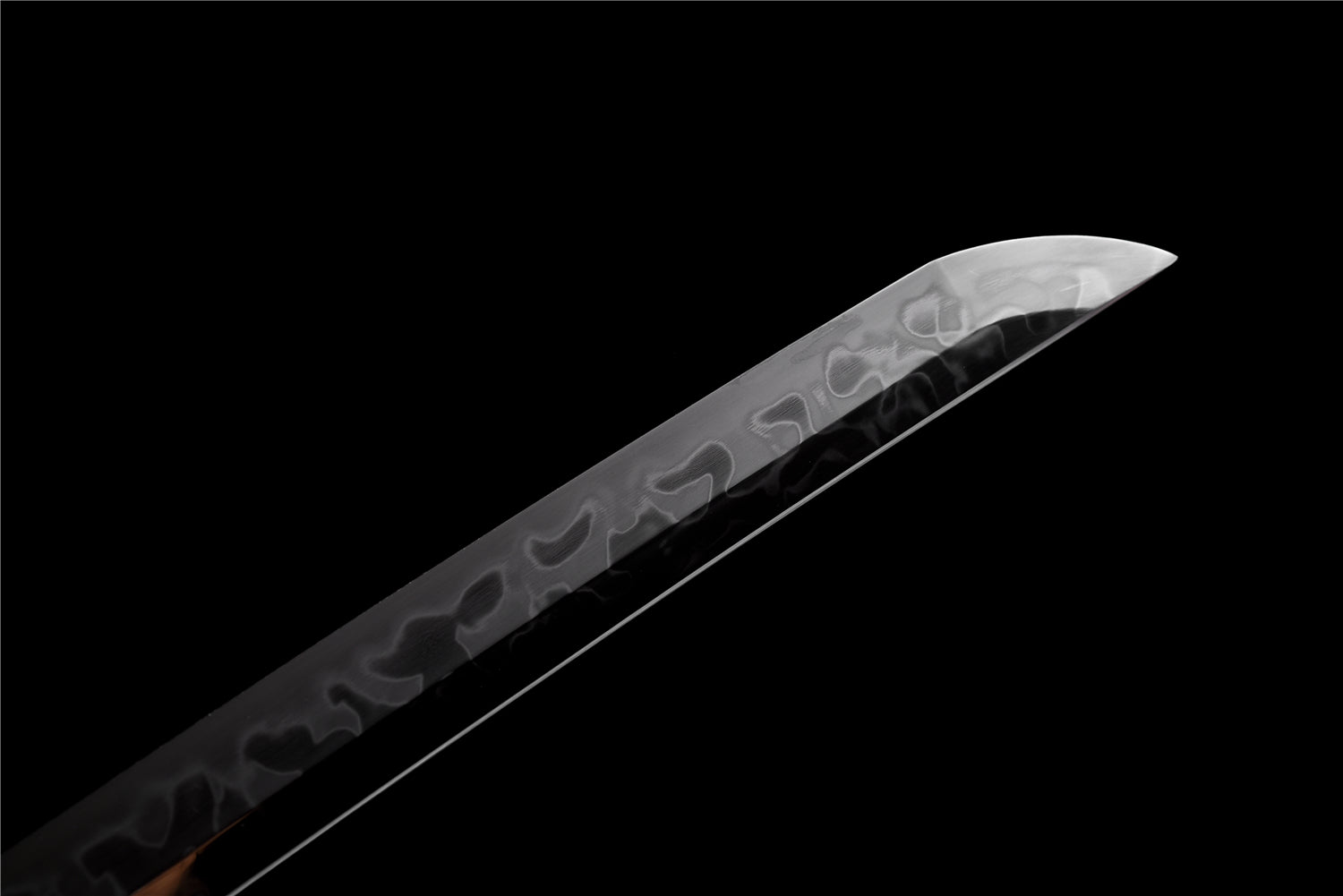
When looking at a katana, it's often the blade that gets all the attention. The hamon line, the steel, the grind. But between the blade and the handle sits one of the sword's most fascinating components: the tsuba . A detail that combines function, aesthetics and history in a way that few other parts of the weapon do.
What is a tsuba?
The tsuba is the round (sometimes square or oval) guard between the blade and the hilt of a Japanese sword construction. Its primary function is simple but crucial:
• Prevent your hand from sliding forward on the blade when making a cut
• Prevent the enemy's blade from cutting your hand in combat
• Give balance and stability to the sword
But unlike many European hand guards, the tsuba in Japan developed into something much more than just a guard.
From function to art form
During Japan's feudal period, especially during the Edo era, the tsuba became a form of artistic expression . Since samurai were often limited in how ostentatious their clothing could be, the details of the sword, especially the tsuba, became a way of expressing status, philosophy, and personality.
Motives that often appeared:
• Nature: waves, clouds, flowers, bamboo
• Mythology: dragons, oni, Shinto symbolism
• Philosophy: void, asymmetry, balance
• War and glory: weapons, armor, battle scenes
An experienced observer could often “read” the wearer’s values just by studying the tsuba.
Materials and manufacturing
Traditional tsuba were mainly made in:
• Iron (most common for combat use)
• Brass and copper alloys
• Shakudō and shibuichi (classical Japanese alloys)
Manufacturing techniques included:
• Casting
• Hand forging
• Engraving and relief work
• Open cutouts (sukashi)
A well-made tsuba is not only beautiful, it is precisely balanced, properly dimensioned and perfectly adapted to the nakago (tang) of the blade.
The role of the tsuba in balance and emotion
An often overlooked aspect is how much the tsuba affects the feel of the sword in the hand .
• Heavier tsuba → more weight near the hand, more stable feel
• Lighter tsuba → faster, more aggressive balance
For practical use this is crucial. For collectors and enthusiasts it is part of the overall experience.
Modern tsubas and Ghost Blade's philosophy
Today there are both historically accurate reproductions and modern interpretations of the tsuba. At Ghost Blades we see the tsuba as more than a decorative part, it is a fundamental part of the sword's identity .
We prefer:
• Clean, powerful shapes
• Materials that age beautifully
• Design that respects Japanese tradition but dares to be modern
A good tsuba shouldn't scream. It should whisper, to those who know what they're looking at.
Summary
The tsuba is a small part of the katana, but its importance is enormous.
It is:
• A hand guard
• A balance point
• A work of art
• A reflection of the wearer's soul
The next time you look at a katana, stop at the tsuba. It is where function, history and craftsmanship meet in perfect harmony.