
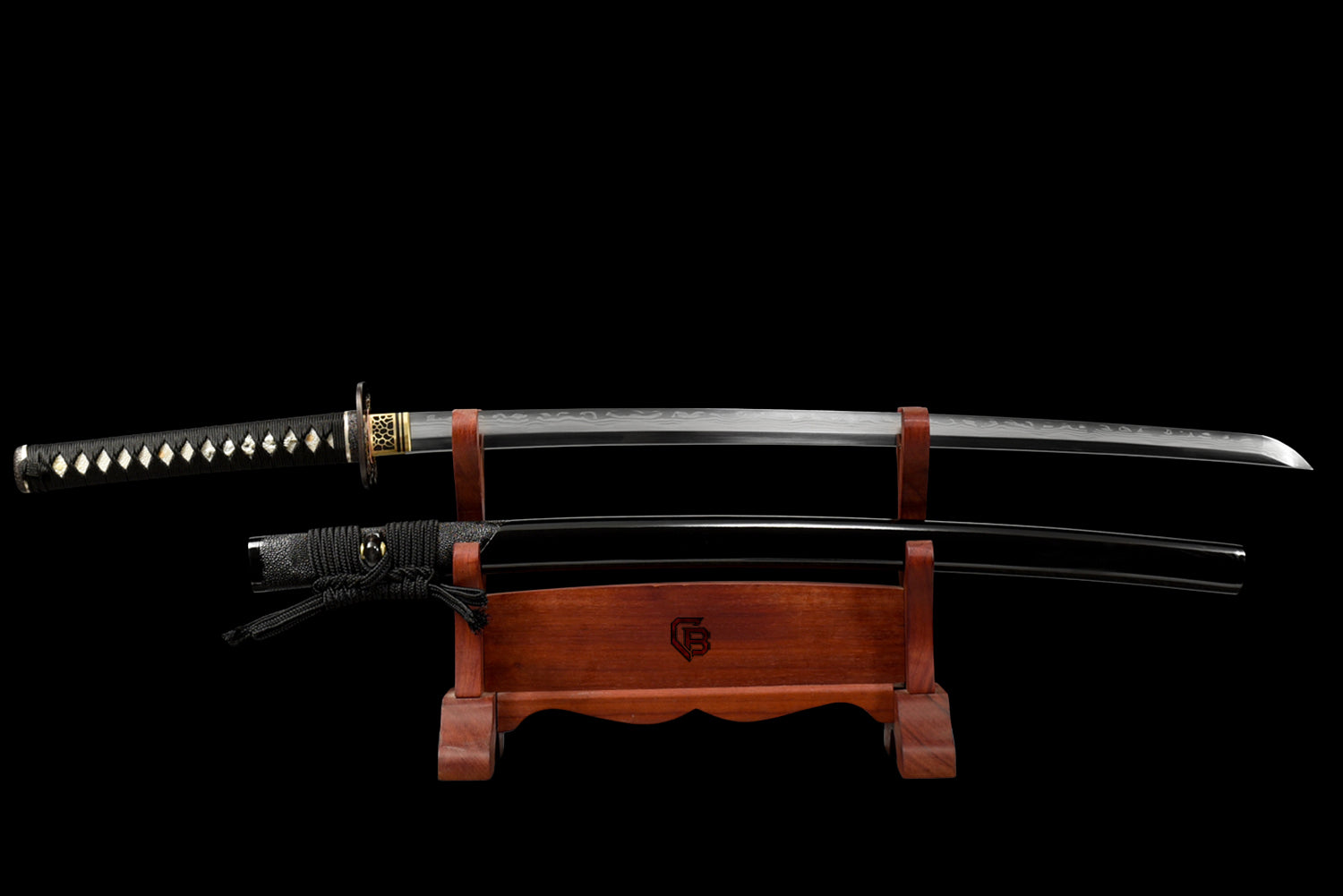
Sting Katana – Folded steel with wavy hamon & exclusive saya
Sting is a high-class katana created for collectors who seek technical perfection and traditional Japanese craftsmanship. The sword combines advanced forging in the form of folding steel and clay hardening, exclusive material choices and uncompromising aesthetics. Every detail is chosen to reflect control, precision and longevity.
Blade
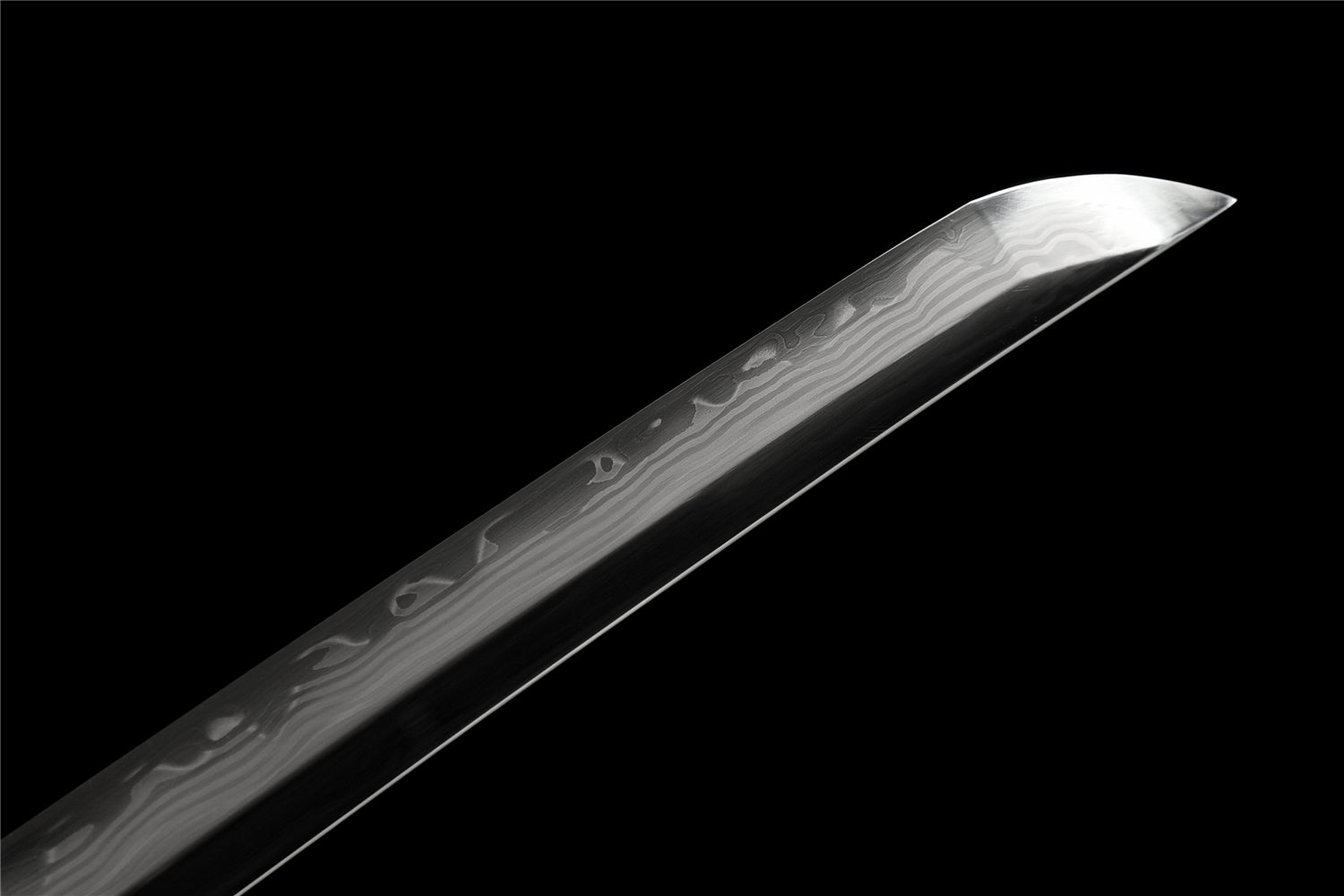
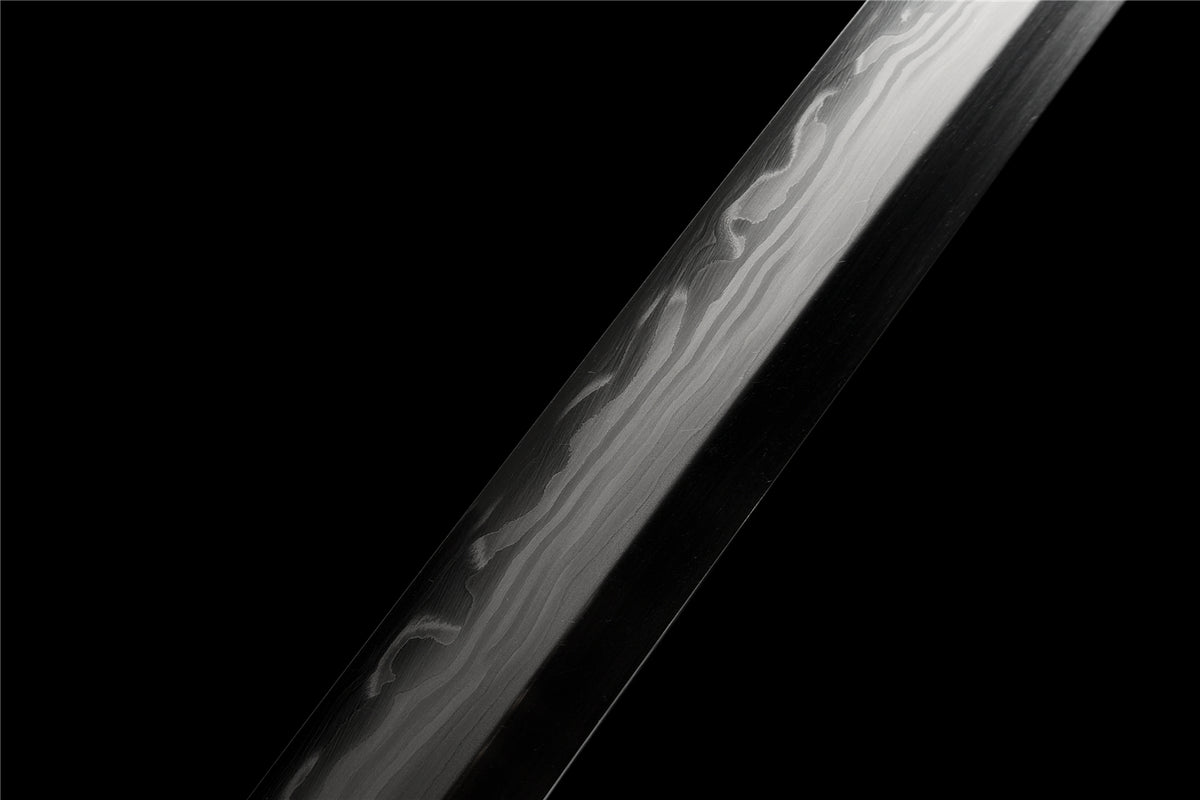
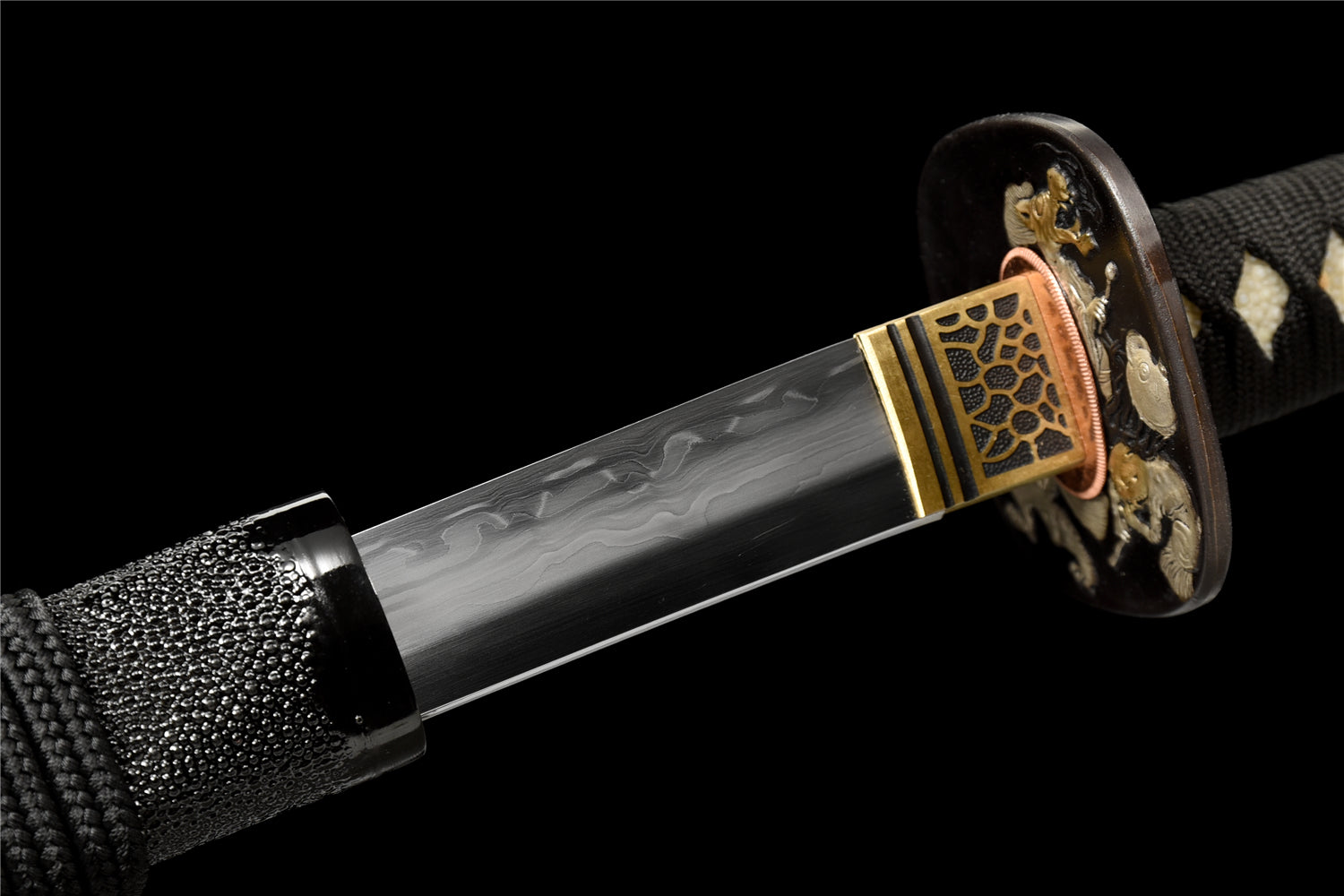
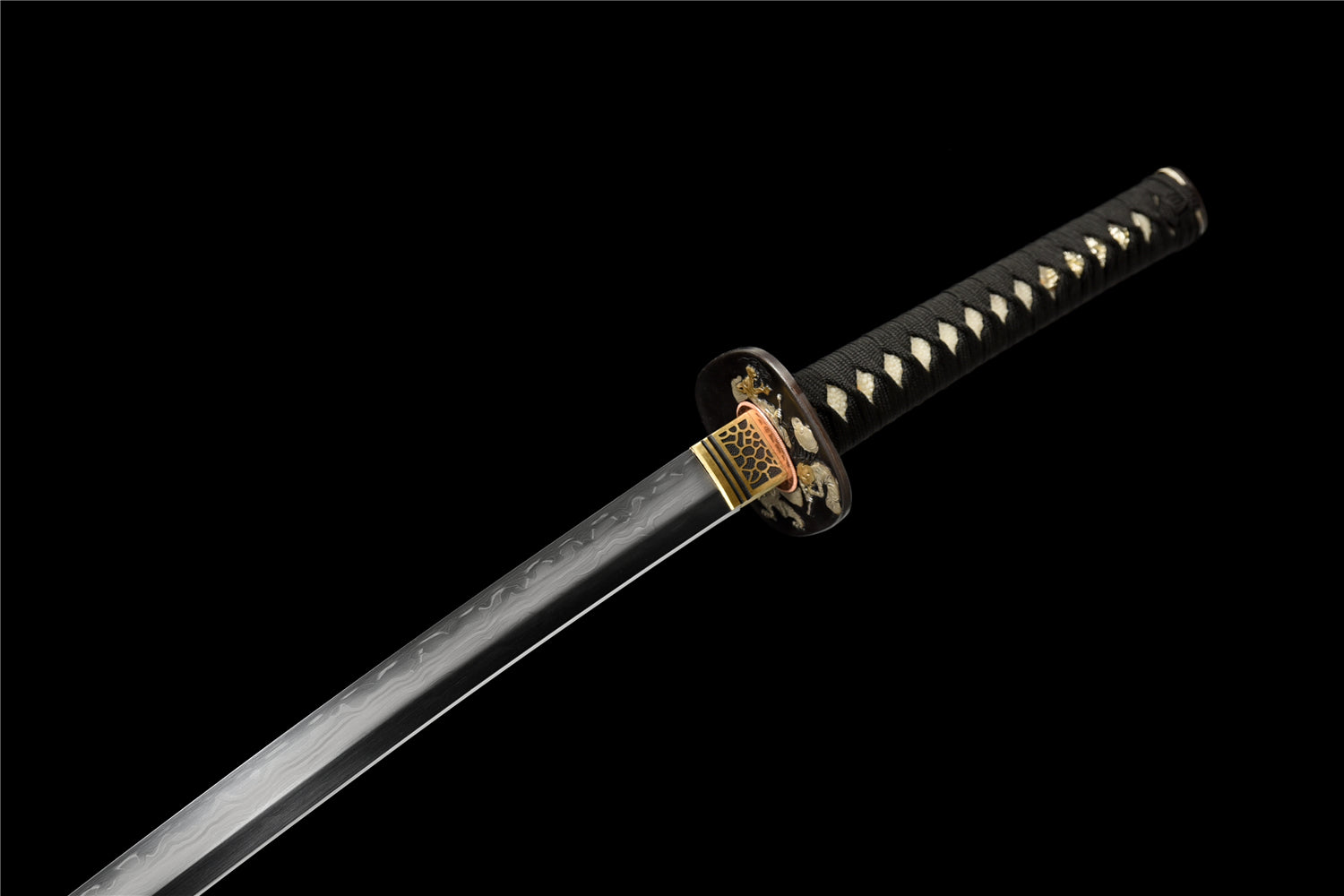
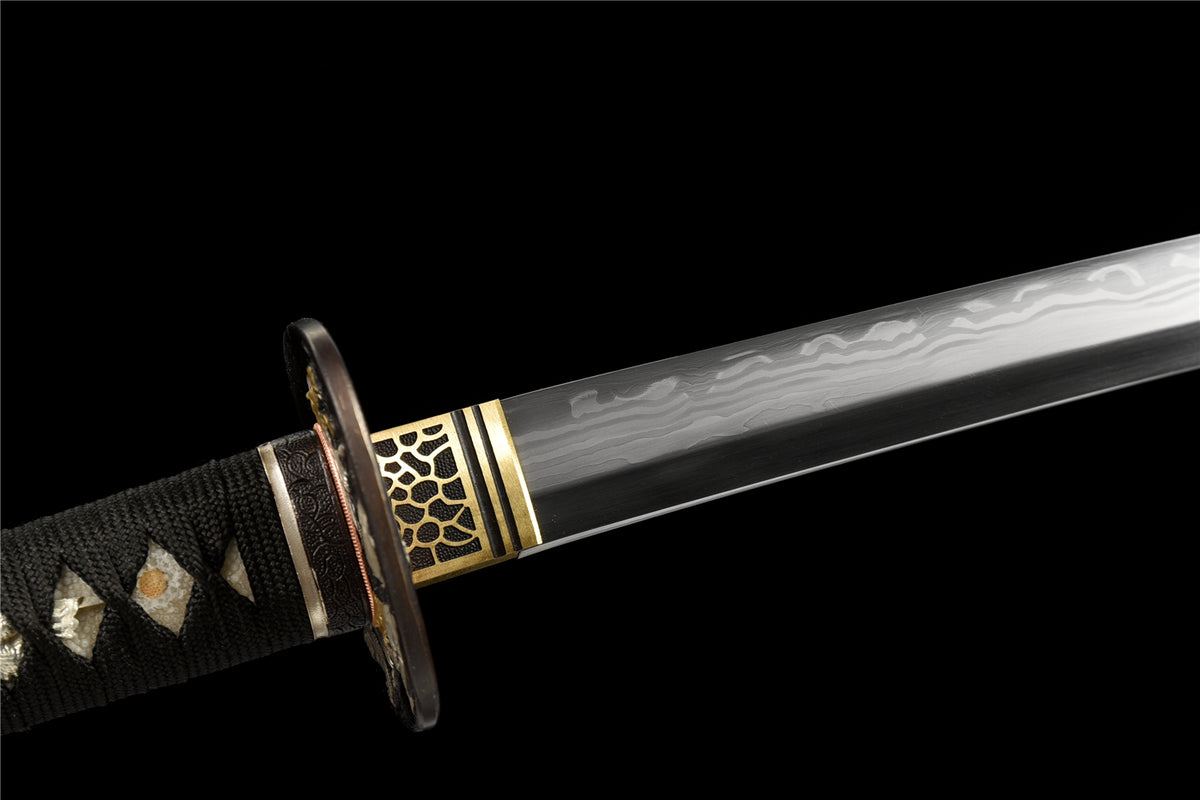
The blade is made of folded steel and has undergone repeated folding during the forging process . Each fold refines the structure of the steel, reduces impurities and builds up a complex layer-on-layer pattern that becomes visible in the blade's surface. This is a time-consuming craft that requires high precision and experience, and is a clear marker of a sword in the higher quality class.
The blade has also undergone advanced clay hardening , resulting in a distinct and natural wavy hamon pattern along the edge. This hardening method provides an optimal balance between a hard edge and a tough spine. The blade is hand polished to highlight the movement and depth of the hamon, and is delivered fully functional and sharp.
Tsuba + Tsuka
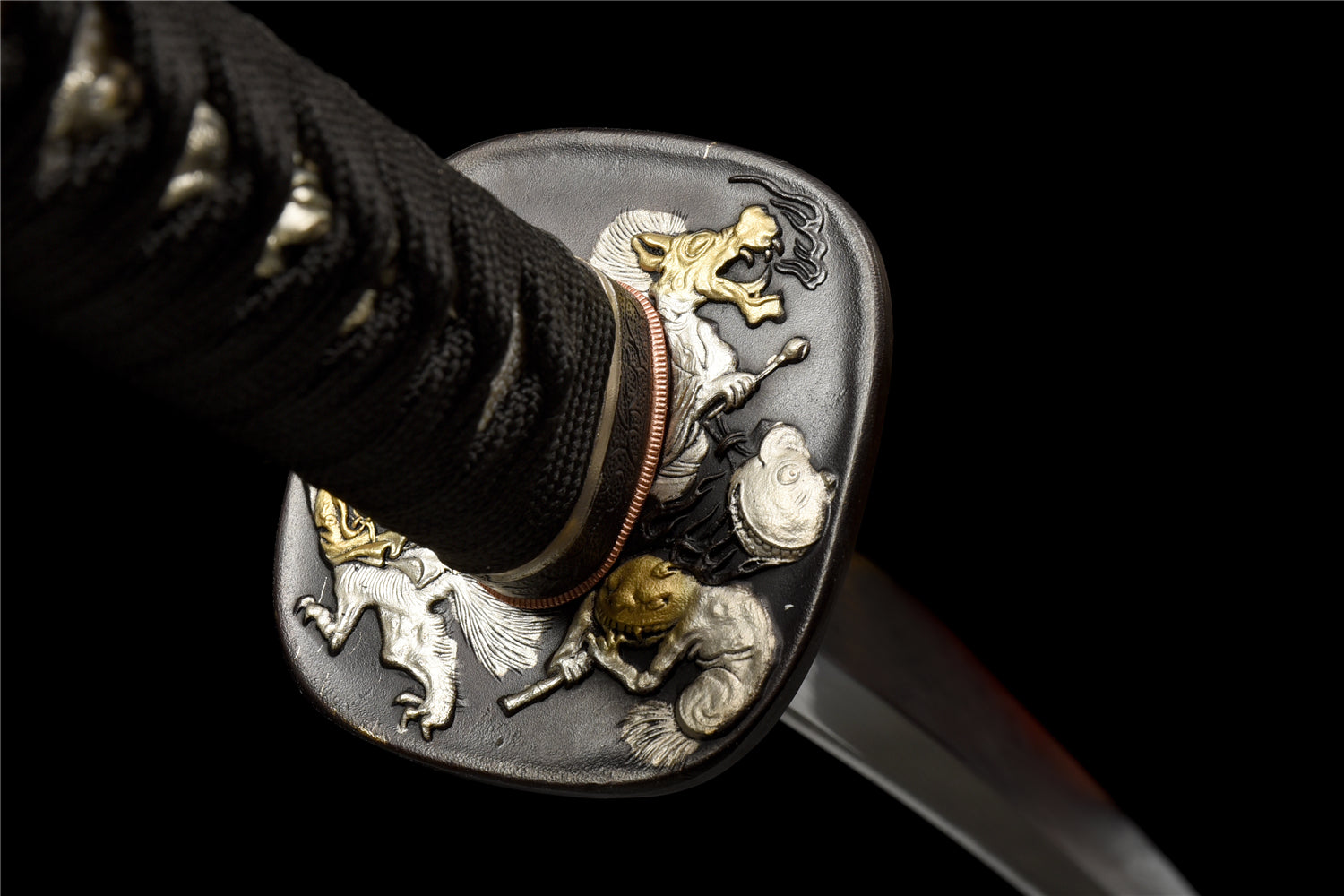
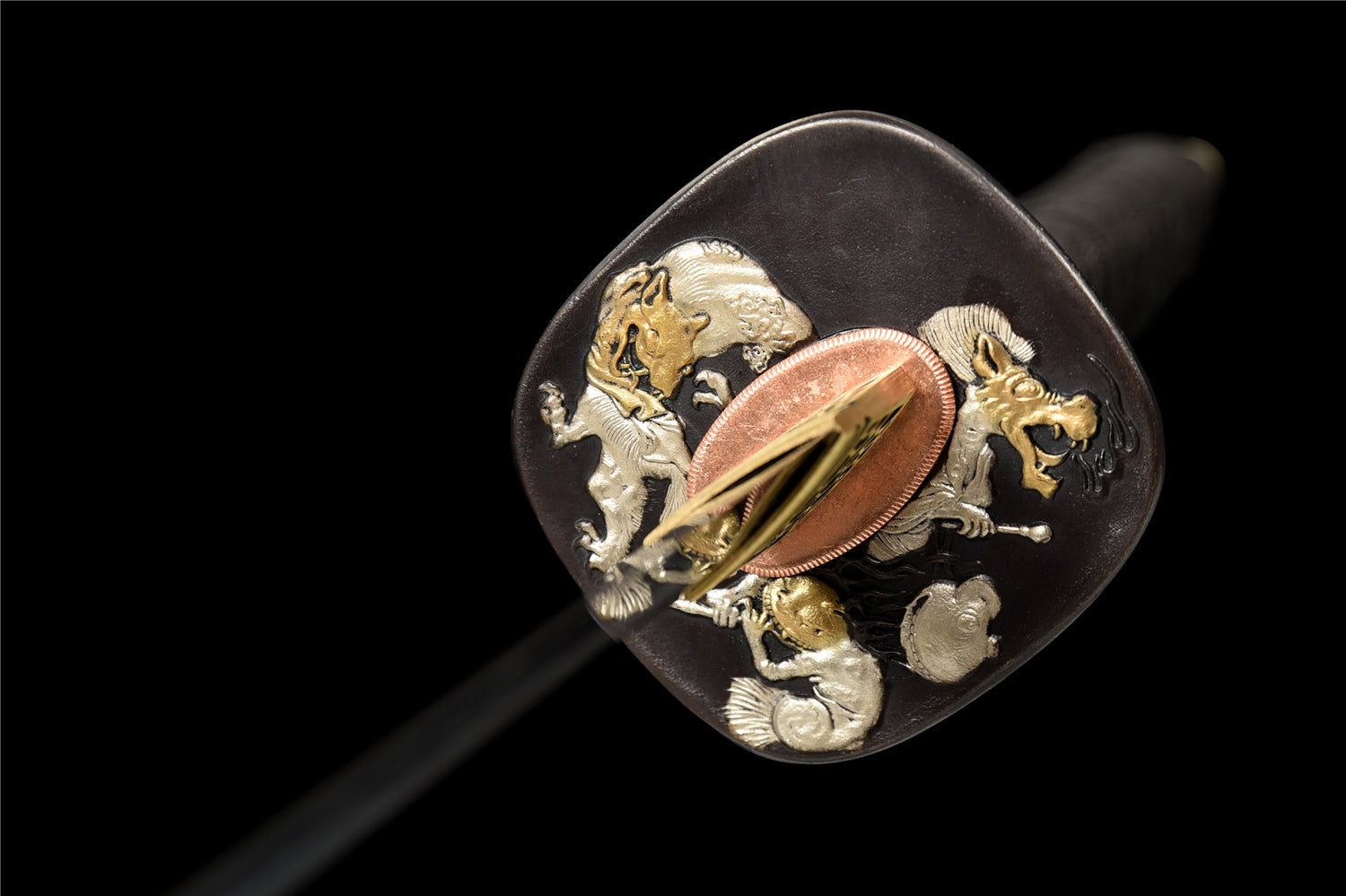
The tsuba and fittings are made of copper , with detailed relief patterns that give both weight and visual character.
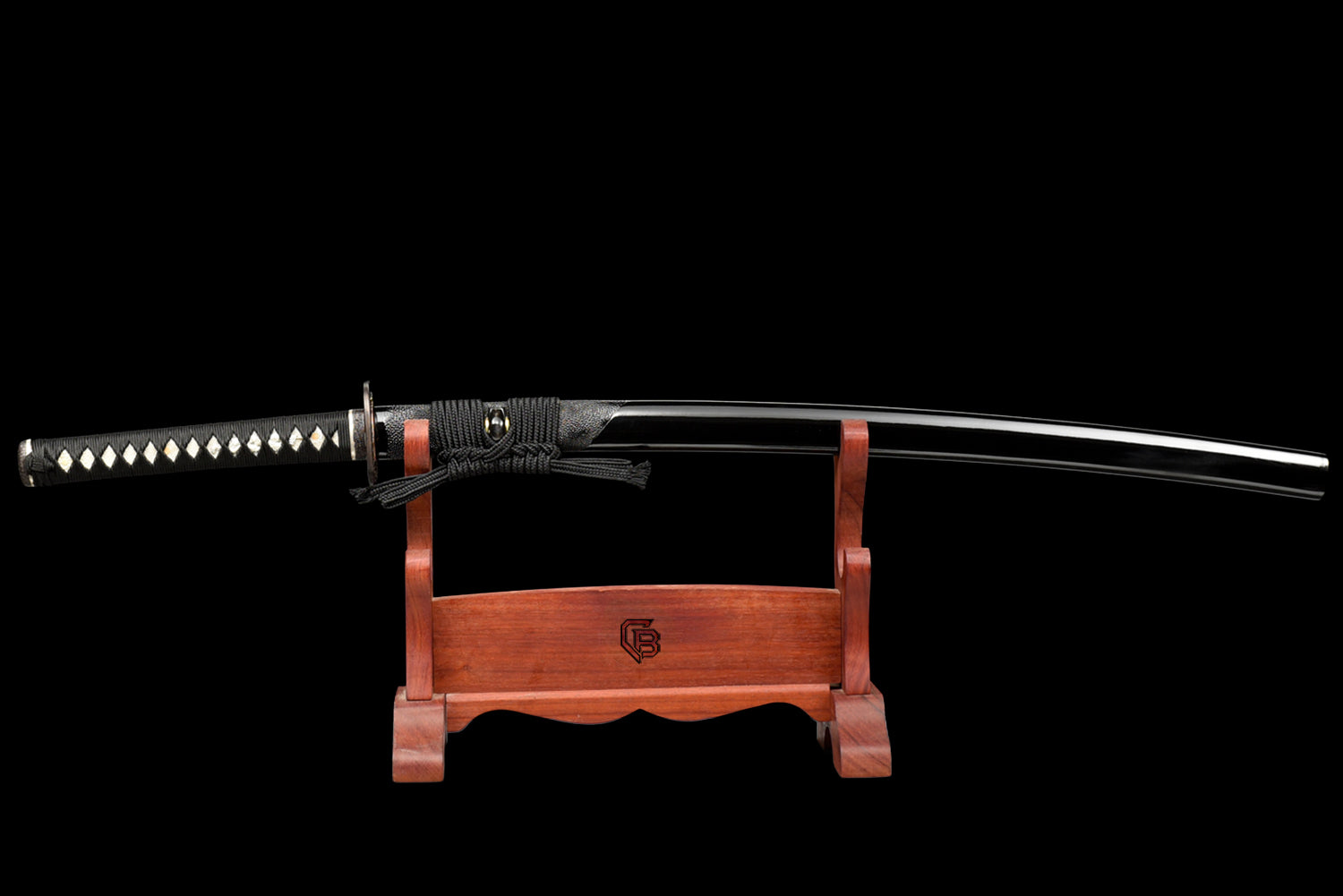
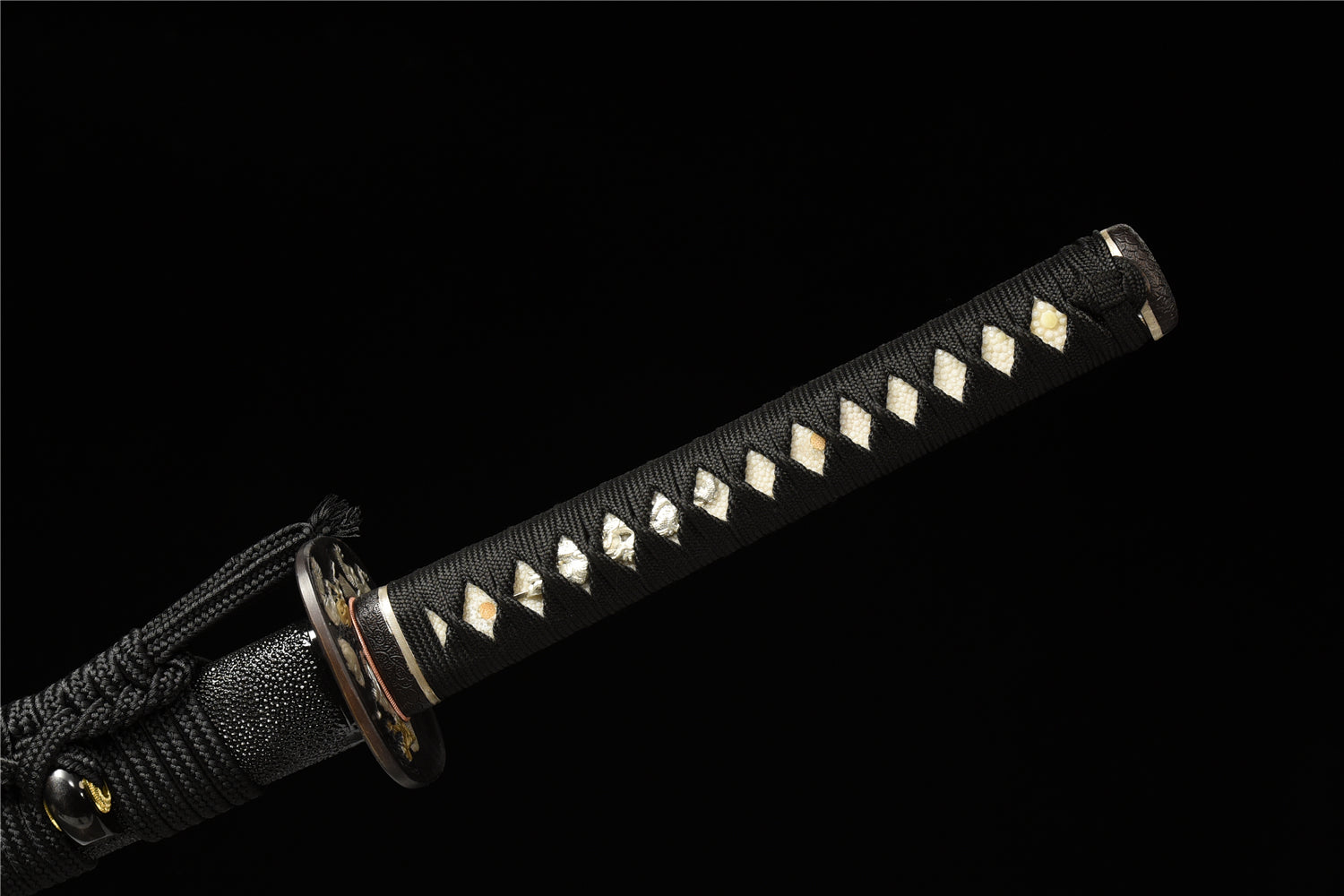
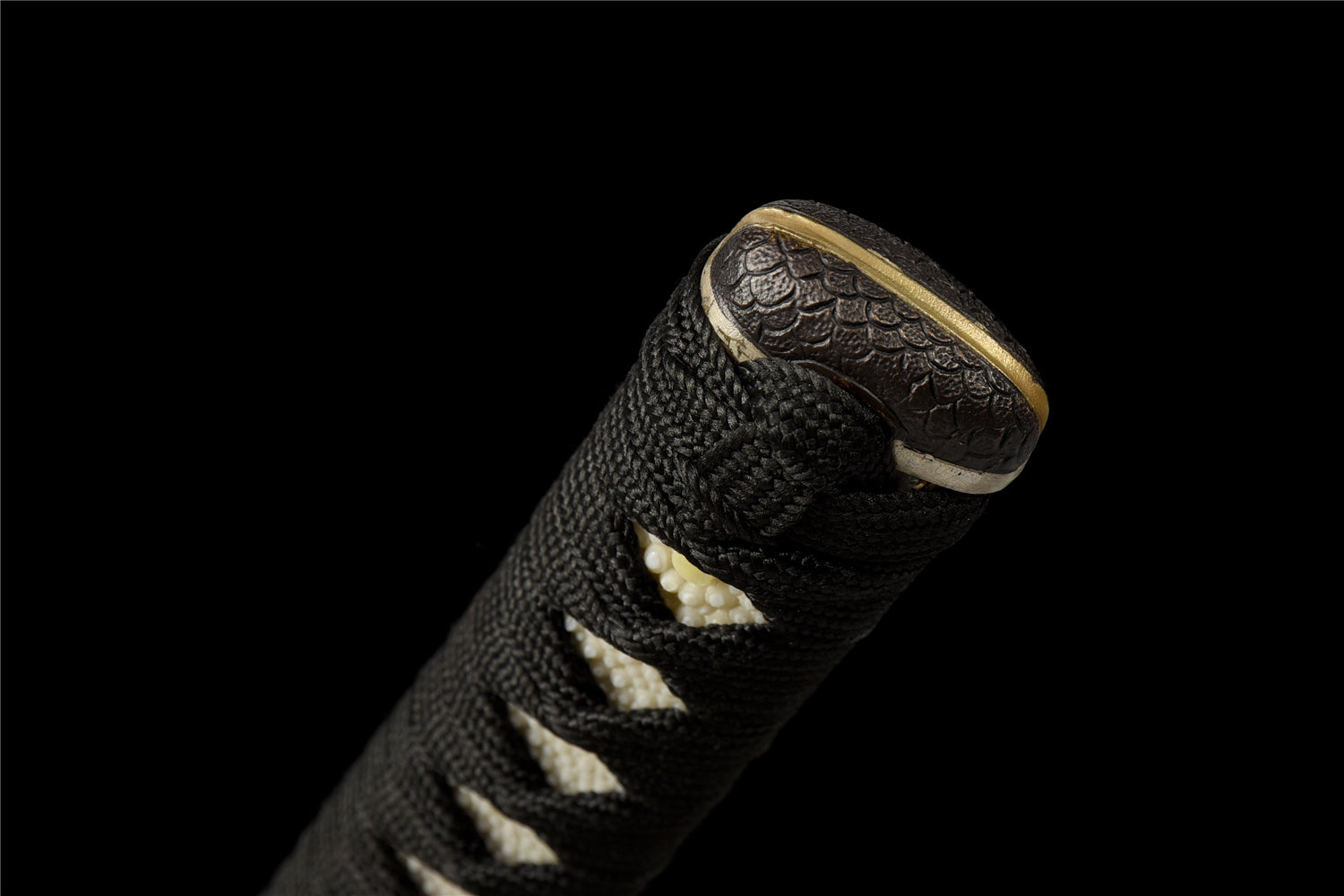
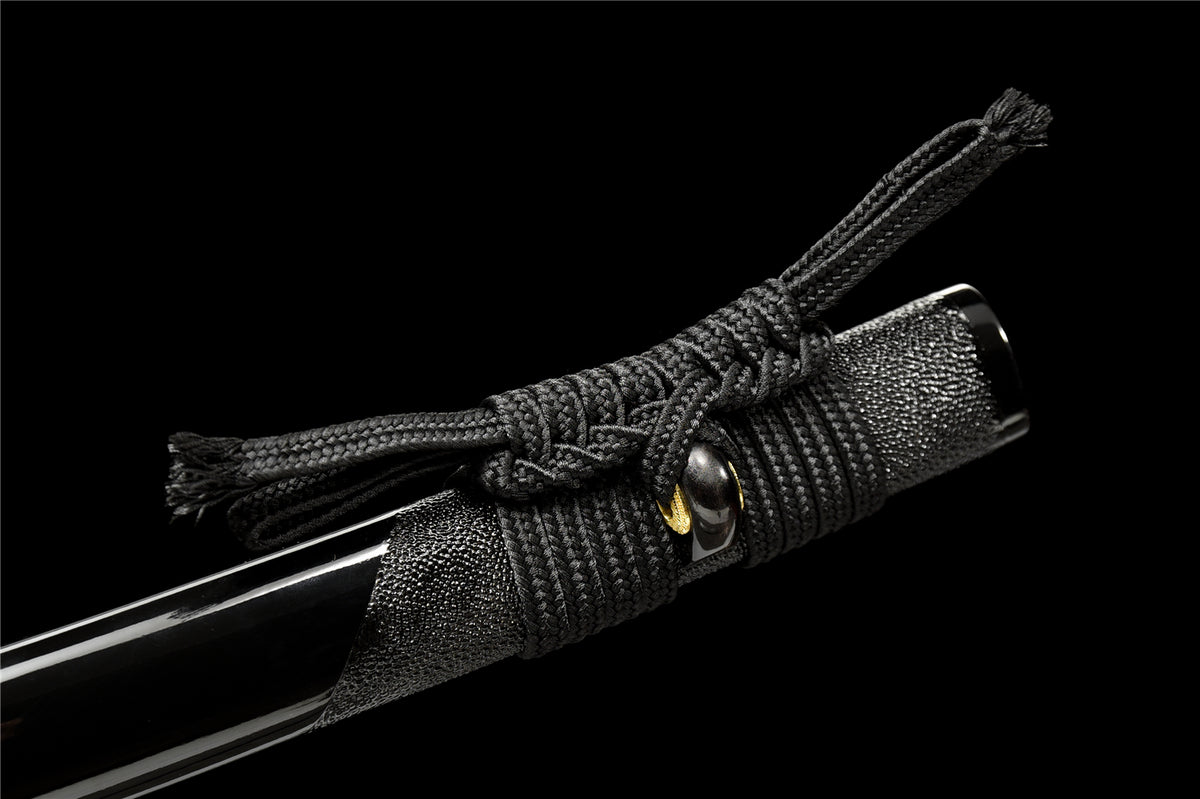
The tsuka is covered in genuine samegawa (stingray leather) and wrapped with traditional ito for a secure grip and authentic feel. The construction provides both stability and comfort when handling.
Saya
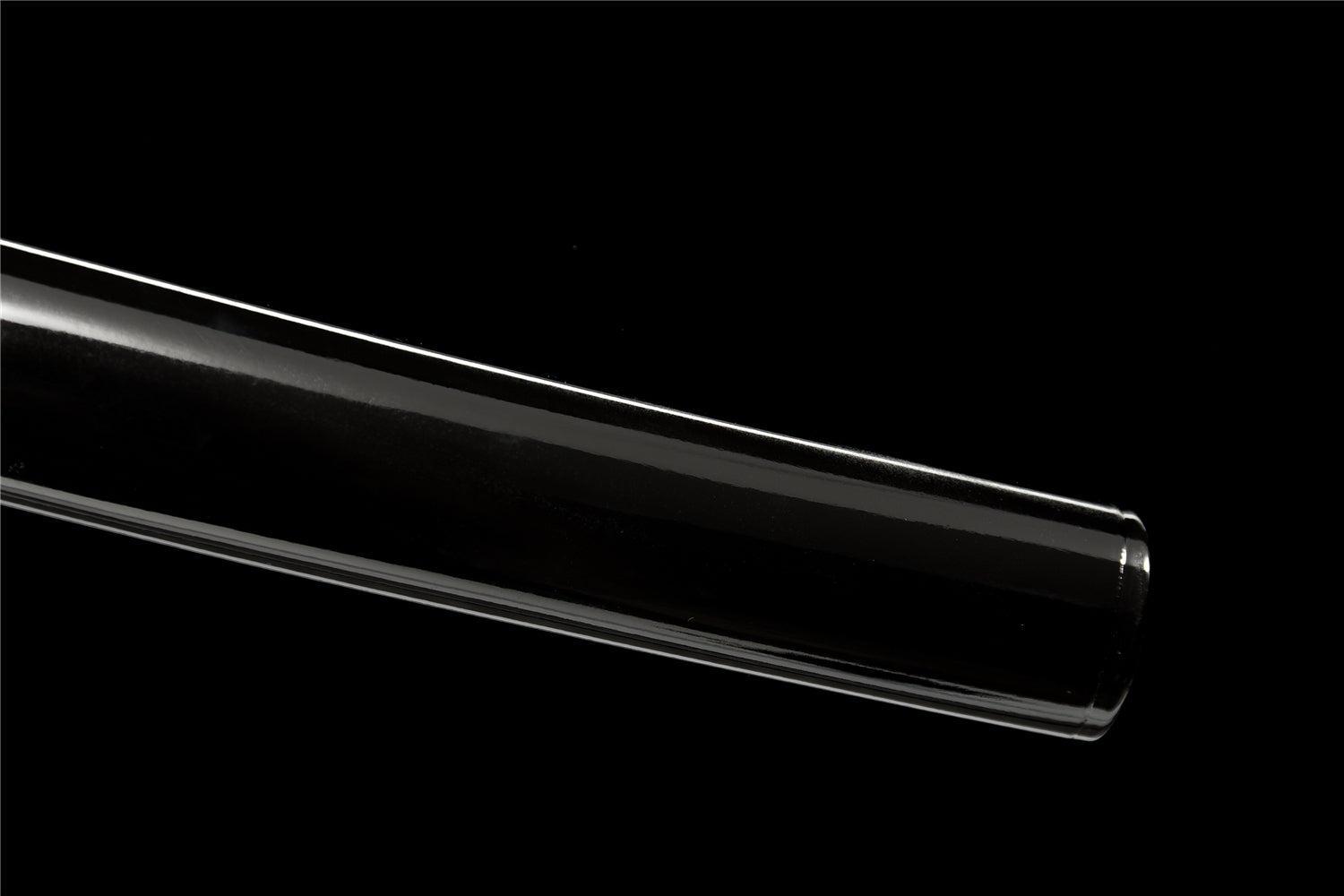
The Saya is high-gloss lacquered and equipped with horn inlays in koiguchi, kurigata and kojiri , which greatly increases wear resistance.
The upper part of the saya is also wrapped in samegawa , a very exclusive feature rarely found outside of the higher price ranges. The result is a saya that is both functional and visually distinctive.
Specifications
Total length: approx. 103 cm
Blade length: approx. 71 cm
Tsuka: approx. 27 cm
Steel: Folded Steel
Hardening: Clay-hardened, wavy hamon
Fittings & tsuba: Copper
Tsuka: Samegawa + ito winding
Habaki: Brass
Saya: Lacquered wood with horn inlay and samegawa
NOTE!
This is a handmade sword . Variations in pattern, hamon and surface finish are natural and a sign of genuine craftsmanship, no two copies are identical.